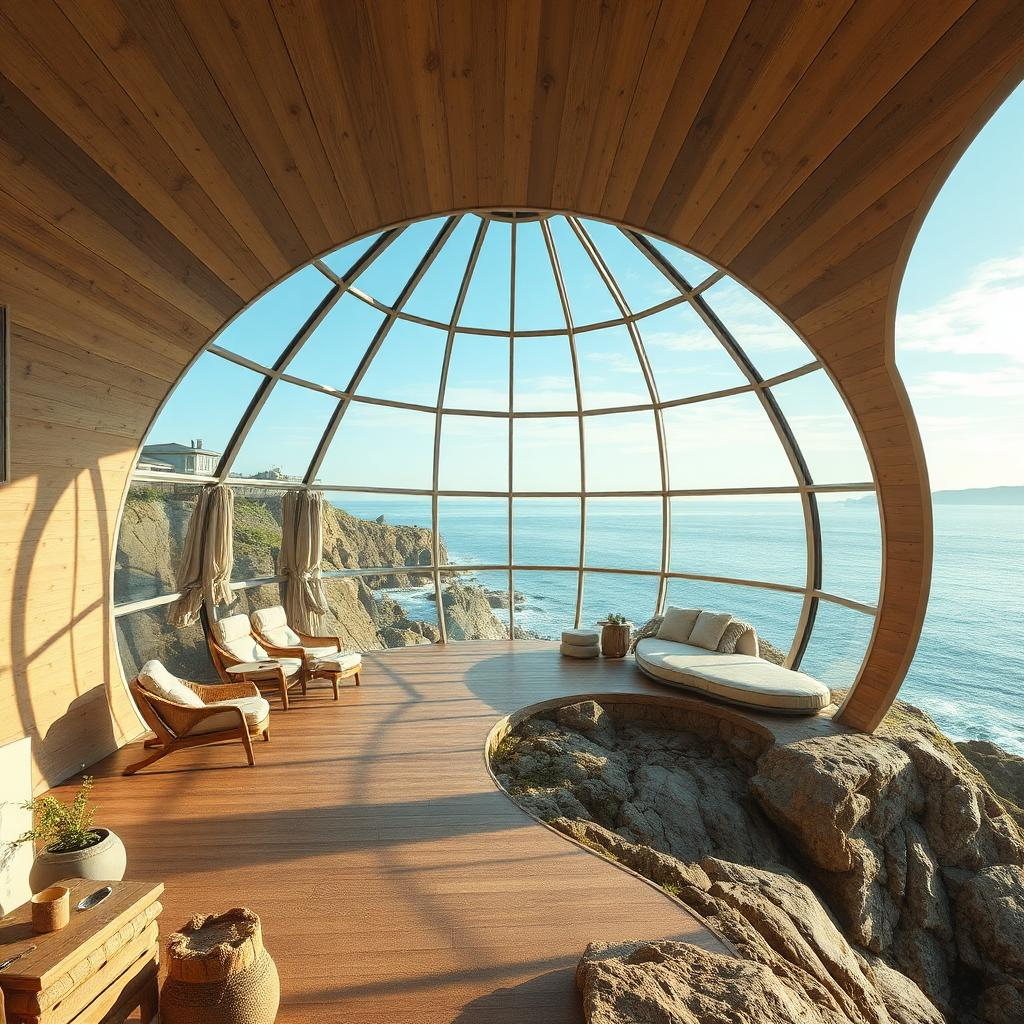
Begin with a clear vision: a curved, light-filled dome perched on a coastal cliff that balances shelter, sustainability, and serenity. Choose a geodesic or monolithic dome form for protection against the strength of wind and salt spray; its curvature minimizes surface area, improves thermal performance, and creates an embracing interior. Orient the dome to maximize morning light and the best harbor views; place primary glazing and a wrap deck on the seaward side, with fewer openings toward prevailing winds.
Light and windows: integrate large, impact-rated panoramic windows and floor-to-ceiling glass panels on the harbor-facing side. Use strategically placed skylights, fixed and venting, to draw sunlight deep into the dome and encourage stack ventilation. Consider clerestory glazing in internal partitions to share daylight between rooms. Use high-performance glazing with low-e coatings and argon fill to reduce heat loss while preserving views. Install exterior shading devices, retractable awnings, and deciduous vines on trellises to control summer glare.
Deck and cliff siting: design a cantilevered timber or composite deck that extends the living space outward, with glass or cable railings for unobstructed views. Use non-slip, salt-tolerant materials and corrosion-resistant fasteners. Anchor foundations and footings with geotechnical guidance to ensure cliff stability and erosion control; employ retaining terraces and native vegetation to protect the slope.
Solar heat and energy: orient roof-mounted photovoltaic arrays on the dome’s sunniest surfaces and add a south-facing thermal solar array or evacuated tubes for water heating. Combine passive solar design, high thermal mass floors, an insulated concrete slab, and south-facing glazing with a heat-recovery ventilation system. Include battery storage and a smart energy management system to prioritize living essentials and spa/pool heating.
Program and flow: place communal spaces, living room, dining, kitchen, beneath the largest skylights and facing the harbor, with open sight lines to the deck. Create a quiet library alcove with built-in shelving curved to follow the dome; orient the library for indirect northern light or shaded eastern windows to preserve books. Design private practice rooms (yoga, therapy, treatment) with flexible partitions, soundproofing, and views of gardens to support practitioners’ varying needs.
Water features and spa: situate a heated, infinity, edge swimming pool on a terrace level, visually extending into the harbor. Integrate a spa, sauna, and treatment rooms adjacent to the pool, with indoor, outdoor flow and privacy screens of planting or louvers. Use heat pumps or solar thermal boosters to reduce energy demand.
Outbuildings and guest spaces: cluster guest cottages and staff housing down slope or along a garden path, using similar dome or timber-frame architecture to maintain aesthetic unity. Provide separate circulation for privacy and emergency access.
Landscaping and productivity: restore native coastal plantings to reduce irrigation. Include terraced gardens, an herb courtyard, a small vineyard on sheltered slopes, and fruit trees in wind-protected microclimates. Use drip irrigation fed by rainwater harvesting and a gray water system for irrigation. Create meditation nooks, stone paths, and plantings that scent and screen.
Materials and maintenance: choose durable, low-maintenance materials resistant to salt corrosion—stainless fasteners, marine-grade paints, and rot-resistant timbers. Plan regular maintenance for glazing seals, deck finishes, and coastal vegetation care.
Finally, collaborate with coastal engineers, architects experienced with domes, landscape designers, and renewable-energy specialists. Prioritize sustainable systems, cliff safety, and an integrated design so the sanctuary feels timeless, restorative, and resilient.
Leave a Reply