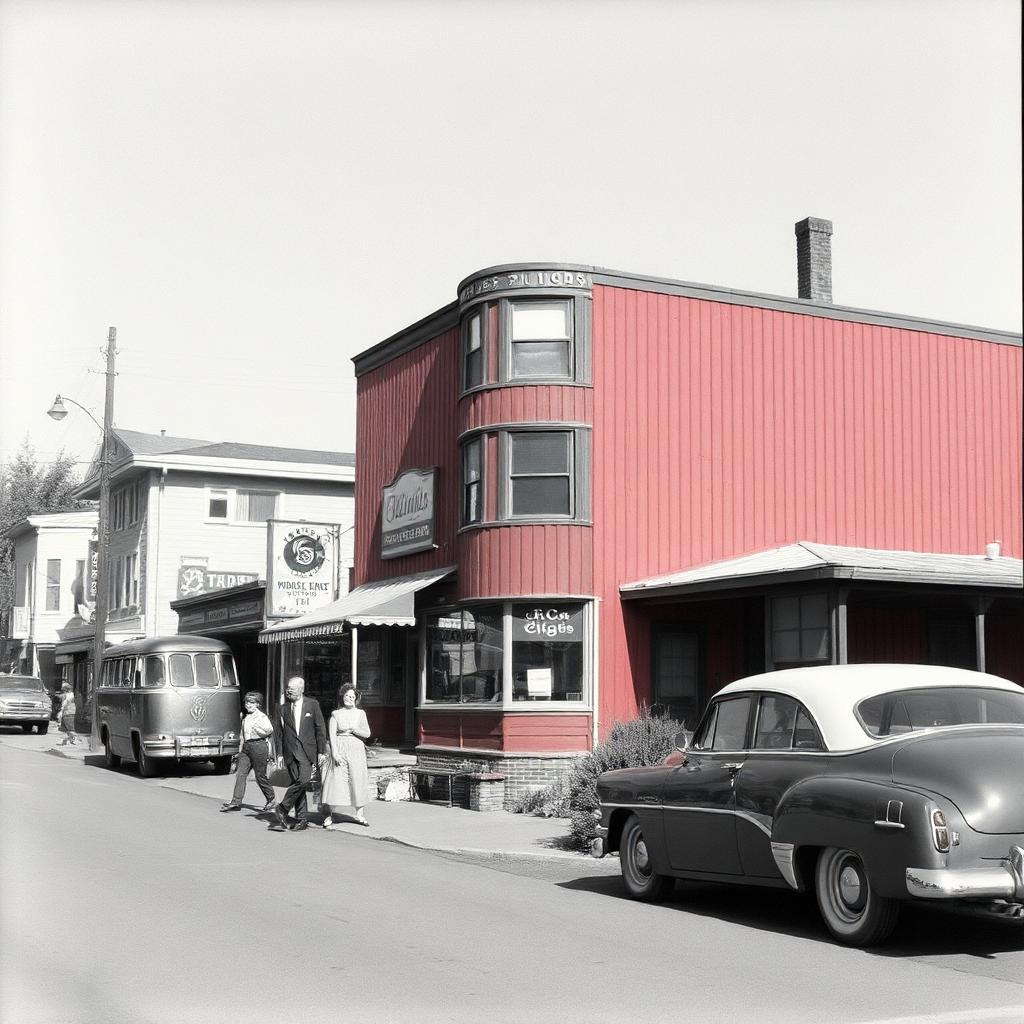
When I close my eyes, I can still see 9th NW and 60th Street in Ballard the way it was in the 1950s and ’60s: a long, two-block ribbon of houses and front yards where more than ninety kids played outside from dawn till dusk. The neighborhood had a rhythm—simple, neighborly, and full of small economies and rituals that tied families together. Groceries were a block away; the milkman still delivered glass bottles to doorsteps every morning, and on Fridays, a fisherman would roll down the street in his truck, calling out, the air smelling faintly of salt and seaweed. You could buy today’s catch without ever getting in a car.
Gillman Park was our summer kingdom. The pool was a glittering blue jewel; we spent afternoons wading in the pool or lying on the grass, towels spread, sweaty and breathing in the smell of chlorine and cut grass. The park was also where we learned the rules of being a kid in a neighborhood, taking turns, watching out for the little ones, and how to patch a scraped knee with the right kind of toughness. Running barefoot in the grass and bees stinging us ever so often. When we needed salt air and a longer ride, Golden Gardens and the Puget Sound were close enough to pedal to. In the other direction lay Green Lake, where we roller-skated around the path in tight clumps or rented a tiny rowboat and pretended we were captains of our own destinies.
Bicycles and trikes were our currency. Every kid had one or wished desperately for one; handlebars and streamers, bells, and patched inner tubes were badges of honor. Some of us formed ad hoc crews: the bottle-and-can pickup was my first enterprise. I had a red wagon and a knack for persuasion—sometimes I’d flag a car down and ask for five cents to drive up the block. It paid for gum, baseball cards, and maybe the mail-in cereal box premium we’d all been saving box tops for. Paper dolls, lariats, dominoes, and cardboard cereal-collectible campaigns kept us entertained for hours. We traded, we hoarded, we proudly showed each other the newest prize.
Religion and community organizations shaped our weekdays and weekends. Many families were Catholic, and there were clusters of Jehovah’s Witnesses and other Christian denominations—each faith brought its own cadence of school, church socials, and potlucks. Neighborhood adults led youth groups: the Girl Scout leader two houses down ran troop meetings in her living room, sewing badges and organizing hikes, while the Brownies met in the folding-chair sanctuaries of the school gym. Across the street, my neighbor’s grandmother’s house, after church, always smelled of lemon polish and music; she was the piano teacher, and on Sundays the house would fill with scales and hymns and the patient tapping of a metronome.
Television offered its own shared mythology. After dinner, families gathered around small wooden consoles. The Lone Ranger and his silver screen heroics held us rapt; Captain Puget—our own local hero—brought a regional wink to TV time, and Stan Boreson’s sing-alongs made even the shyest kid clap. Wanda Wanda, to name another popular TV show. Later came Saturday serials and the steady comfort of those familiar faces and jingles. But even with TV, most of our play happened outdoors—swing sets in backyards, impromptu baseball games in vacant lots, and neighborhood barbecues that pulled everyone onto porches with plates of potato salad and laughter.
Pets were everywhere—cats that lounged in sunbeams and dogs that chased the paperboy. Families were real families: grandparents living with kids, kids babysitting younger siblings. I started babysitting at twelve, walking two streets over with a bottle and a book, learning responsibility in the hard, rewarding way. There were rules, but they were flexible: the teacher’s whistle for sidewalk riding, the cranky neighbor who’d yell for us to keep it down, and the tacit agreement that if someone needed help, someone else would answer.
That era felt like a slow, golden hour stretched over an entire childhood. There was work to do—collecting bottles, delivering papers, mowing lawns—but it always played out in a social space: neighbors swapping stories on stoops, kids racing to the next adventure, the fisherman’s truck rumbling away with orders taken for the week. It was a patchwork of small economies and big imaginations, where a wagon, a pool, and a bike could make the world feel boundless. Those two blocks on 9th NW and 60th shaped who I became—rooted in community, comfortable with simple joys, and grateful for the ordinary magic of summer evenings and sun-dried laundry.
Leave a Reply