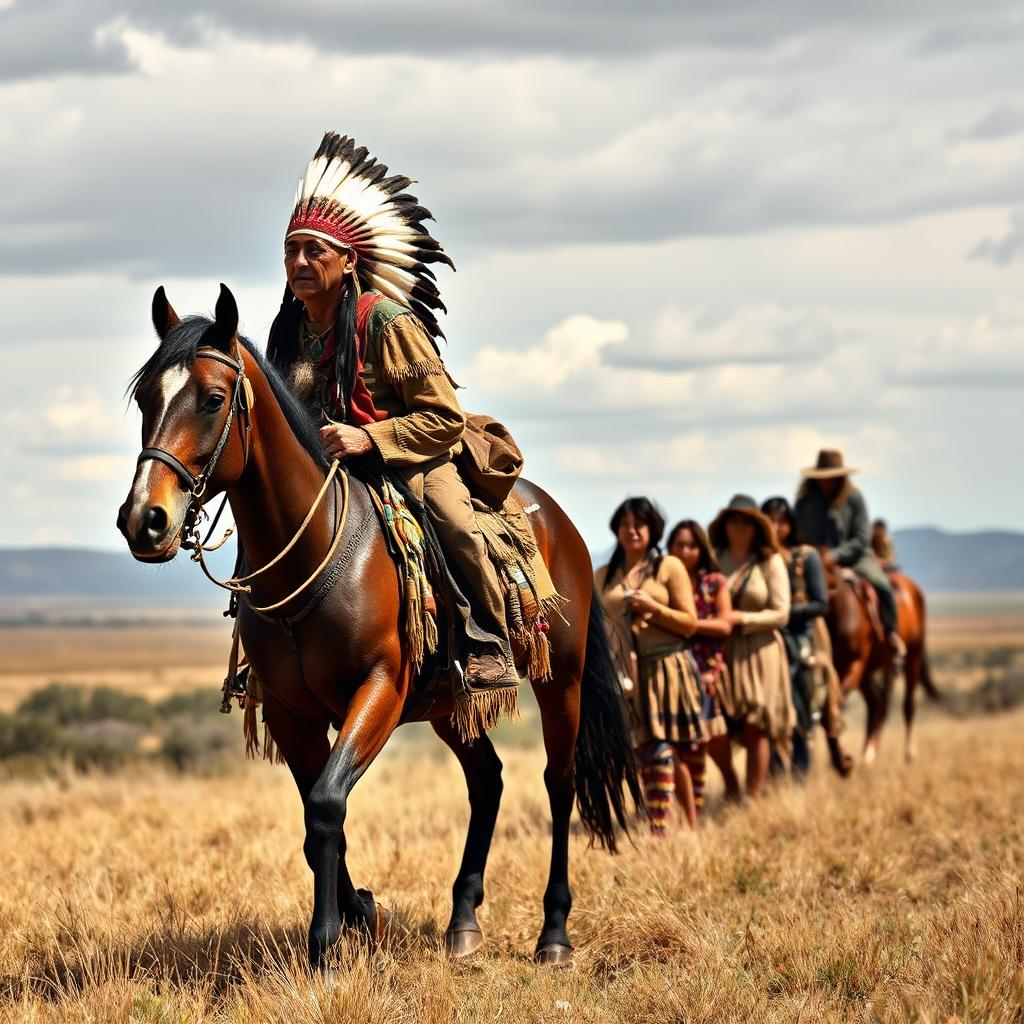
Touch The Earth opened a door in me that had been quietly ajar for years, revealing a history threaded through my own family. This lineage carried both the resilience of the Cherokee people and the deep wounds of displacement, erasure, and control. Growing up, I knew only fragments: a petite grandmother with brown hair and eyes who struggled with drinking and health problems, who would arrive at our house seeking help and be turned away. I was too young for meaningful conversations with her before she died. What I did inherit, without understanding why, were objects and instincts — an Indian doll, a woven basket from that side of the family, and later an intuitive ability to gather reeds and plants and teach basket-weaving. At the time I taught, I attributed the skill to some unnamed intuition; now I see it as the echo of a lineage interrupted but not destroyed.
Reading about the Cherokee — their advanced societies, their legal systems, their agriculture, and the catastrophic forced removals like the Trail of Tears — clarified for me how systematic and personal the erasure was. The separation wasn’t only physical; it was cultural and psychological. When governments moved families, split communities, and criminalized ways of life, they didn’t simply change geography. They rewired identity, sowing shame and fear, making survival sometimes mean hiding who you were. My great-grandmother’s constant covering — gloves, hats, long sleeves, concealing dark hair and face — is a small, intimate portrait of that larger coercion. It reads like protection: against discrimination, against loss of opportunity, against violence. It is also proof of the painful calculation many made between safety and selfhood.
This inherited secrecy shows up in strange ways across generations. My grandmother’s repeated returns to my mother, seeking help and perhaps forgiveness, mirror a broader dynamic of families trying to reconnect to what was taken from them — access, dignity, the right to belong fully. The reluctance my father showed to let her stay speaks to the complexity of stigma and fear: protecting a household’s precarious stability, perhaps, or internalized shame. The result is a pattern of partial presence and absence. Family objects like the basket become relics, holding memories and acting as placeholders for conversations never had.
Touch the Earth made me see that the control exerted by colonizing institutions extended into private life. When people must hide their heritage to survive under a dominant culture’s rules, the cultural transmission that anchors identity becomes fragmented. Skills, stories, and rituals that once passed naturally between generations are left to intuitive memory — the reed-gathering and basket weaving that surfaced in my twenties without conscious lineage. There is grief in that gap, but also a stubborn continuity. The fact that I could teach weaving suggests a lineage that refuses to be fully erased, an embodied knowledge that survives through body and hand even when speech and public recognition are denied.
Learning more about the Cherokee and my own family’s immigrant-in-place history reframes those early images of concealment and illness not as personal failing but as responses to a violent system. It helps me bear witness to my grandmother and great-grandmother’s choices with compassion and to recognize the resilience wrapped inside their apparent retreat. It also surfaces broader questions about control: how power structures dictate who belongs and who must hide, how shame is taught and inherited, and how recovery requires both personal storytelling and communal restoration.
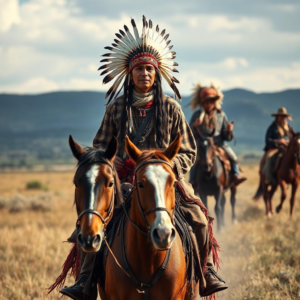
Today, I hold my grandmother’s basket and teach others to weave with a different eye. Each reed I gather feels like reclaiming a thread of history. Each class is an act of repair — passing on a practice that resists erasure and honors those who kept it alive despite fear. I think of my great-grandmother covering herself not as submission, but as a survival strategy that allowed something vital to endure. Touch The Earth didn’t just teach me history; it gave me a language to understand my family, to name the wounds, and to renew the small, persistent acts that keep heritage breathing. Notice the horse below has two heads, confused by the trail and direction to travel. Scouting ahead to protect the tribe.
Leave a Reply